
Tree & Stump Removal
Removal Work Done Without Property Damage
Tree & Stump Removal in Washington for hazardous trees, storm damage response, and site preparation
Trees leaning over homes after root failure, storm-damaged specimens hung up in adjacent canopies, or site clearing that requires dozens of stumps ground before construction starts all demand different equipment and approaches than routine pruning. A&A Tree Service operates throughout Washington, New Milford, Bridgewater, and Roxbury with cranes, bucket trucks, and stump grinders sized for residential access limitations and commercial-scale removals. The difference between stump grinding, which removes wood six to eight inches below grade, and full stump extraction, which pulls the entire root ball, determines whether you can replant immediately or need to wait for remaining roots to decay.
Hazardous tree removal near power lines or structures involves rigging systems that lower sections in controlled descents rather than dropping limbs that could damage roofs, fences, or driveways. Tight-space extraction uses specialized rigging when trees are surrounded by landscaping, hardscaping, or buildings that prevent traditional felling. Stump grinding converts remaining wood into chips that fill the hole, while full extraction leaves clean soil necessary for foundation work, paving, or utility trenching.
Request an on-site inspection to determine rigging requirements and whether stump grinding or full extraction better serves your project's next phase.
Why Stump Grinding and Full Extraction Serve Different Needs
Stump grinding uses a rotating carbide wheel to chew wood below the soil surface, leaving fine chips that decompose over several years and small roots that decay naturally without interfering with lawn restoration or replanting. This method costs less and causes minimal ground disturbance, making it suitable when you're restoring turf, planting gardens, or simply eliminating the tripping hazard and eyesore that stumps create. Full stump extraction pulls the entire root mass with an excavator, which is necessary when pouring foundation footings, installing underground utilities, or grading for driveways and parking lots that cannot tolerate voids left by decomposing roots.
After removal and grinding, you'll see level ground filled with wood chips where the stump once sat, ready for topsoil and seed once chips settle. Properties cleared for construction have exposed subsoil free of root obstructions, allowing immediate excavation or paving work without delays caused by hitting buried wood during digging. Emergency storm response removes trees from roofs, driveways, or utility lines within hours of damage, with sections cut and hauled to restore access while minimizing further harm to structures or surrounding vegetation.
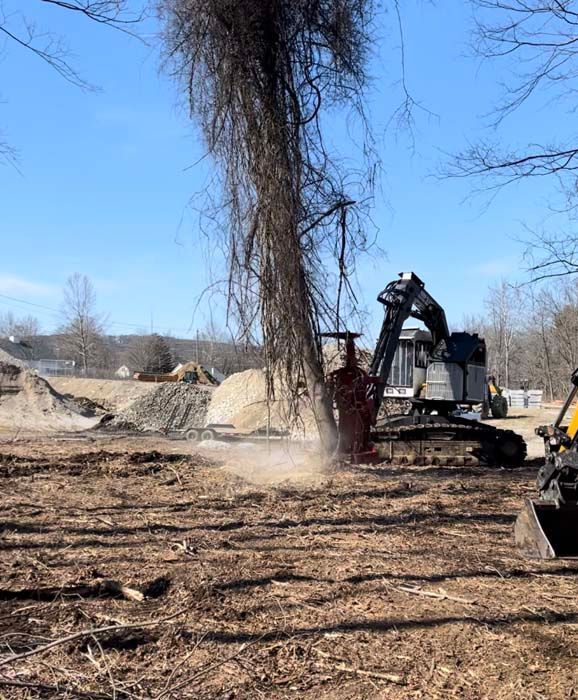
Mass stump removal for multi-family complexes or commercial developments typically involves grinding multiple stumps in a single mobilization, which reduces per-stump costs compared to individual removals spread across weeks. The grinding depth required depends on whether you're sodding, seeding, or building over the area, with deeper grinding necessary for construction and shallow grinding sufficient for landscape restoration.
Common Questions About This Service
Tree and stump removal decisions depend on understanding access requirements, cost factors, and how the removal method affects your property's immediate usability and future plans.
- What makes a tree hazardous enough to require removal?
- Visible decay at the base, large dead limbs over structures, lean exceeding fifteen degrees toward targets, or root damage from construction all indicate failure risk that pruning cannot adequately reduce.
- How is removal handled when trees are close to homes?
- Sectional dismantling with ropes and pulleys lowers each piece vertically to the ground, preventing lateral swing that could strike siding, windows, or rooflines during cuts.
- When should stump grinding happen after tree removal?
- Grinding can occur immediately after removal or weeks later, though grinding fresh stumps is easier because wood hasn't hardened and roots remain pliable enough for the cutting wheel to process efficiently.
- What happens to wood chips after stump grinding in Washington?
- Chips are either spread in the hole to fill the void, spread as mulch elsewhere on your property, or hauled away if you're preparing the area for construction or prefer not to have excess organic material decomposing on-site.
- How deep does grinding need to go for different uses?
- Lawn restoration requires grinding six to eight inches below grade so roots don't interfere with mower blades, while construction sites often need twelve inches or full extraction to prevent voids under slabs or footings.
A&A Tree Service provides 24/7 emergency storm response for trees blocking access or threatening structures, along with scheduled removal for site development and hazard mitigation. Schedule a property inspection to assess removal complexity, equipment access, and whether grinding or extraction aligns with your site's intended use.