
Excavation
Grading and Drainage That Prevent Water Problems
Excavation in New Milford for foundation work, drainage solutions, and site grading
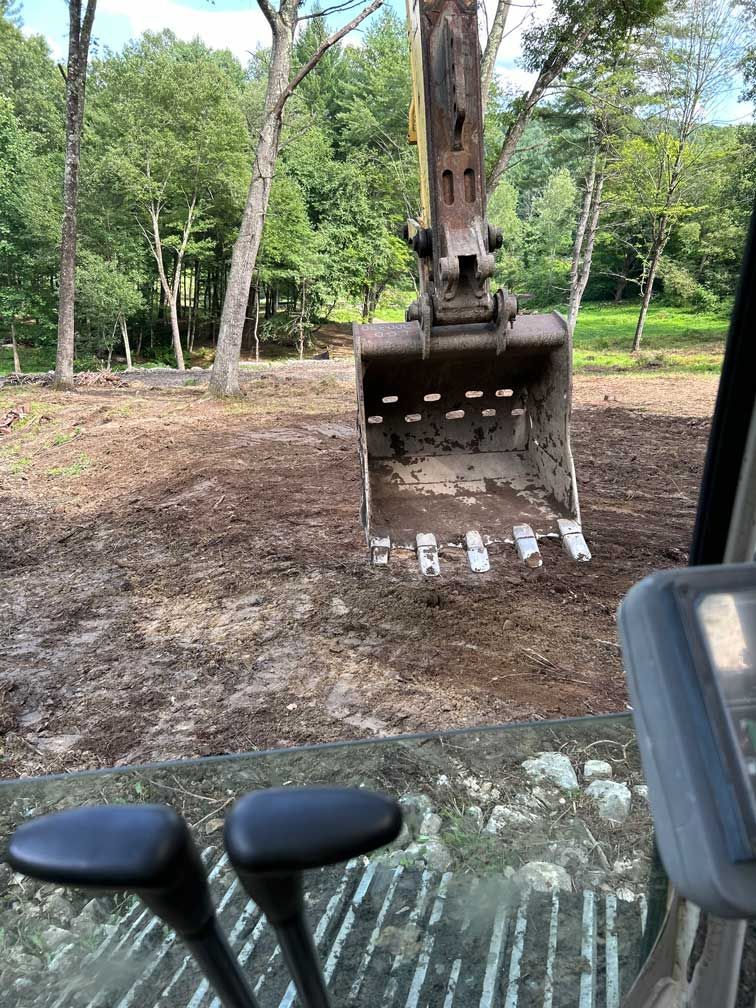
Water pooling near foundations, driveways that channel runoff toward homes, or sites requiring building pads cut into slopes all involve excavation work that reshapes terrain to control drainage and establish stable construction surfaces. A&A Tree Service operates excavators, backhoes, and grading equipment across New Milford, Bridgewater, Washington, and Roxbury for residential projects including house additions, septic installations, and French drain systems, plus commercial work such as parking lot prep, utility trenching, and retention basin excavation. Knowledge of local permitting requirements prevents delays caused by starting work without proper approvals for land disturbance or wetland proximity.
Foundation excavation involves digging to frost depth—typically four feet in Connecticut—to prevent heaving during freeze-thaw cycles, then establishing level footings that distribute structural loads evenly. Drainage solutions like French drains require trenching to specific slopes that move water away from problem areas, with perforated pipe surrounded by washed stone that filters sediment while allowing groundwater to enter and flow toward discharge points. Grading work reshapes slopes to redirect surface runoff, prevent erosion, and create level areas for patios, driveways, or building pads.
Schedule a site consultation to review drainage issues, obtain elevation measurements, and determine excavation depth and permitting requirements.
What Changes After Excavation Is Finished
Proper excavation creates defined drainage pathways where water previously pooled or flowed unpredictably, with swales and graded slopes channeling runoff toward storm drains, retention areas, or natural drainage routes. Foundation holes are dug to engineered dimensions with vertical walls and compacted bases ready for footing pours, while trenches for utilities are sloped and bedded according to specifications that prevent settling or pipe damage after backfilling. Erosion control measures such as silt fencing and temporary seeding stabilize disturbed soil during construction phases.
You'll notice elimination of standing water in areas that previously flooded during rainstorms, level building sites where slopes once made construction impractical, and clear access routes for heavy equipment or material deliveries. Commercial projects gain parking lots graded to direct runoff into designed collection systems rather than allowing uncontrolled flow across paved surfaces. Estate owners see improved property aesthetics with terraced slopes, level lawn areas, and drainage features integrated into landscaping rather than left as exposed ditches.
Excavation depth and scope depend on whether you're addressing surface water movement, installing underground infrastructure, or preparing foundations that require compacted structural fill and engineered backfill to support loads. Permitting timelines vary based on project scale and proximity to wetlands or water bodies, with local zoning boards requiring erosion control plans for disturbances exceeding certain acreage thresholds.
What Property Owners Usually Ask
Excavation projects raise questions about timing, permitting, and how the work addresses both immediate drainage problems and long-term site stability.
- What does French drain installation involve?
- Trenching to a depth of eighteen to twenty-four inches with a consistent slope of one percent, laying perforated pipe in a bed of washed stone, wrapping the stone in filter fabric, and backfilling with topsoil to restore the surface.
- How does grading prevent water from reaching foundations?
- Establishing slopes of at least six inches of drop over the first ten feet away from the house directs surface runoff away from basement walls and prevents hydrostatic pressure that causes seepage.
- When is excavation work best scheduled in New Milford?
- Late spring through fall offers dry ground conditions that allow heavy equipment to operate without rutting saturated soil, though emergency drainage work proceeds year-round when water intrusion threatens structures.
- What permits are required for residential excavation?
- Projects involving foundation digging, septic systems, or significant grading typically require building permits and land disturbance approvals from local zoning offices, with specific requirements based on property location and project scope.
- How is excavated soil managed during projects?
- Topsoil is stockpiled separately for reuse in final grading and landscaping, while subsoil and rock are either used as structural fill, spread on-site to adjust grades, or hauled away if volumes exceed what the property can accommodate.
A&A Tree Service handles permitting coordination, erosion control implementation, and excavation work scaled for residential estate improvements and commercial site development. Arrange an evaluation to identify drainage solutions, obtain grading plans, and establish project timelines that account for permitting and seasonal ground conditions.