
Pond Construction & Dredging
Water Features Built for Function and Longevity
Pond Construction & Dredging in Roxbury for stormwater management, sediment removal, and recreational water features
Sediment accumulation that reduces water depth and storage capacity, stormwater runoff requiring retention before discharge, or properties lacking functional water features for irrigation or recreation all benefit from pond construction or dredging that restores or establishes designed water volumes. A&A Tree Service builds new ponds and dredges existing systems throughout Roxbury, New Milford, Bridgewater, and Washington for residential estates seeking aesthetic and functional water features and commercial properties managing runoff compliance or HOA maintenance requirements. Eco-friendly dredging techniques minimize turbidity and dispose of sediment in ways that prevent downstream impacts or regulatory violations.
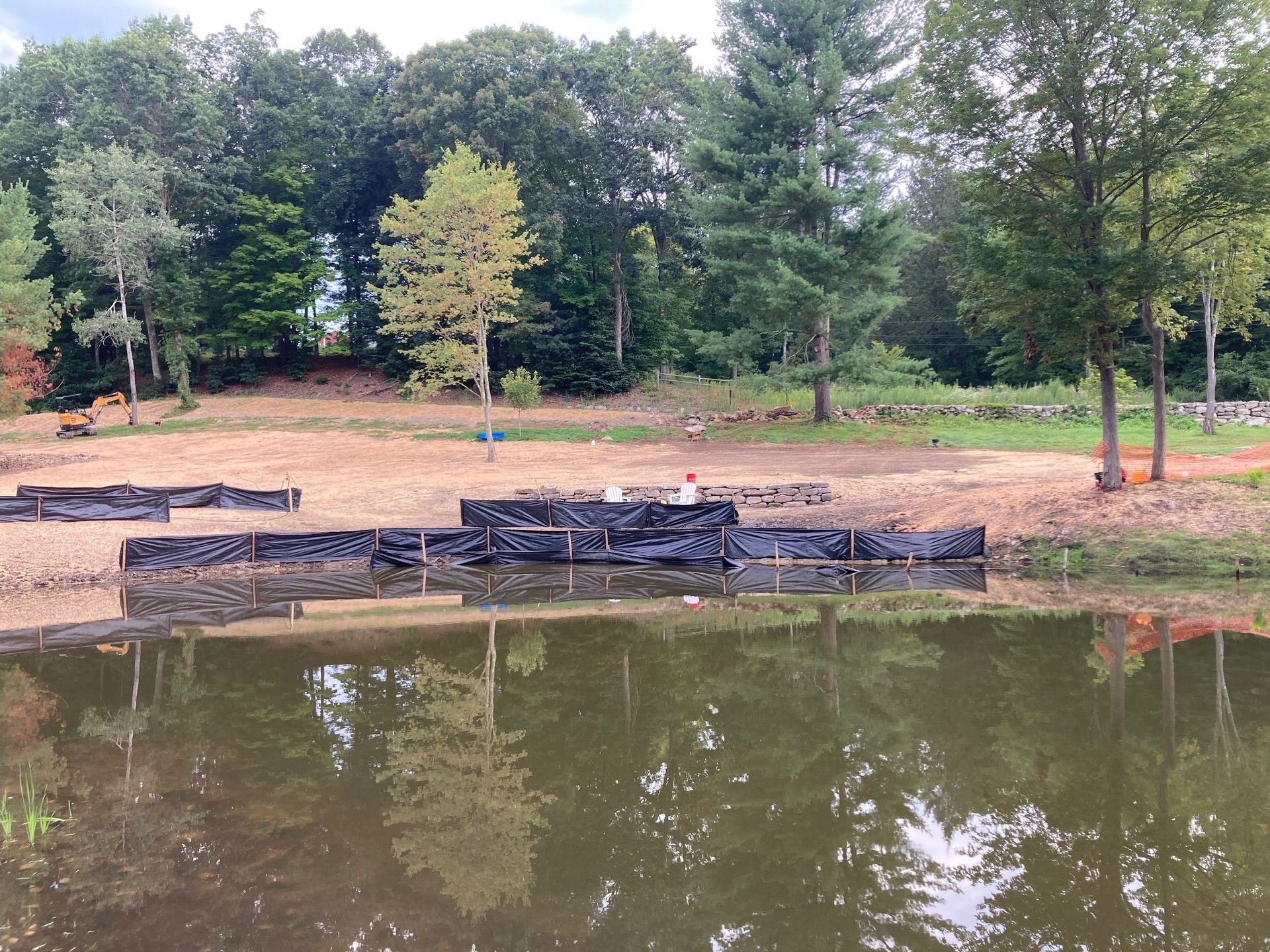
New pond construction involves excavating basins to engineered depths with side slopes stable enough to resist erosion, installing overflow structures that manage excess water during storms, and compacting soil or installing liners that prevent seepage. Dredging removes accumulated sediment, organic matter, and vegetation that has filled existing ponds over years of runoff carrying soil, leaves, and debris into the basin. The difference between building and dredging lies in whether you're creating water storage where none exists or restoring capacity lost to sedimentation.
Request a site assessment to evaluate soil conditions, water sources, and whether new construction or dredging addresses your property's water management needs.
The Difference Between Building New Ponds and Dredging Existing Ones
Building new ponds requires excavating to depths of eight to twelve feet for year-round water retention, shaping side slopes at 3:1 ratios to prevent collapse, and establishing inflow and outflow points that balance water supply with controlled discharge during high-rainfall periods. Clay soils common in Connecticut provide natural sealing, while sandy or permeable soils may require compacted clay liners or synthetic membranes to maintain water levels. Overflow spillways prevent uncontrolled breaching during storms, directing excess water to stable discharge areas rather than allowing erosion that undermines dam structures.
After dredging, you'll notice increased water depth where shallow areas previously supported excessive vegetation, improved water clarity as decomposing organic matter is removed, and restored storage capacity that allows the pond to function as designed for stormwater retention. New pond construction delivers functional water features where none existed, providing irrigation sources, wildlife habitat, or aesthetic focal points for estates and retention capacity that satisfies stormwater regulations for commercial developments. Sediment disposal involves dewatering dredged material in contained areas, testing for contaminants if required by local regulations, and either spreading dried sediment on-site as soil amendment or hauling to approved disposal facilities.
Dredging frequency depends on watershed size, vegetation density in surrounding areas, and erosion control measures upstream that affect sediment delivery rates. Commercial properties often dredge every five to ten years to maintain compliance with stormwater permits specifying retention volumes, while residential ponds may go longer between maintenance cycles if surrounded by stable, vegetated buffers that filter runoff before it enters the basin.
Questions Before Starting Your Project
Pond projects involve decisions about construction approach, maintenance intervals, and how the water feature integrates with broader property drainage and regulatory requirements.
- What determines whether a new pond or dredging is needed?
- If no pond exists and you need water storage, irrigation supply, or stormwater retention, new construction is required; if an existing pond has lost depth and capacity to sediment, dredging restores original function without rebuilding the entire basin.
- How is sediment removed during dredging?
- Excavators with long-reach booms scoop material from the pond bottom while positioned on the shoreline, or amphibious equipment operates within the pond itself for deeper or larger basins requiring extensive sediment removal.
- When should dredging happen to minimize environmental impact?
- Late summer through fall when water levels are lowest and aquatic life is least active, reducing turbidity spread and allowing easier access to sediment without disturbing spring breeding or winter dormancy periods.
- What permits apply to pond work in Roxbury?
- New construction typically requires wetland permits if within regulated areas, dam safety approvals for impoundments exceeding certain volumes, and erosion control plans, while dredging may need inland wetland permits depending on pond size and location relative to watercourses.
- How does pond construction help with stormwater management?
- Retention basins temporarily hold runoff during storms, allowing sediment to settle and reducing peak discharge rates into downstream drainage systems, which satisfies regulatory requirements and prevents erosion in receiving waters.
A&A Tree Service provides pond construction and dredging services that address both functional water management needs for commercial properties and aesthetic, recreational goals for residential estates. Contact us to review your property's water features, assess sediment accumulation, and develop a construction or maintenance plan that meets regulatory standards and long-term performance expectations.